Glyphs of Time :: a blog by jarvis grant

February 7, 2013

The 2013 Mobile Photography Awards and Me

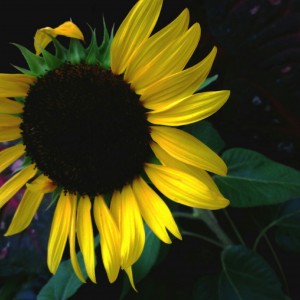
Sunflower #7

Sunflower from the atrium courtyard, National Museum of American Art, ©Jarvis Grant, 2012

In the summer of 2012 I found a new venue of expression, phone camera. As stated in my last blog post, I had always been a camera snob. One reason was I saw so much poor camera phones photography. I have owned phones that had cameras, but never used them beyond visual note taking. When I upgraded to my EVO 4G LTE, with its 8 megapixel camera, the need to investigate its possibilities was very strong.

When I first began using the device, I always had my Panasonic LX-3 with me, and I would “shoot behind” anything I did with the EVO with the LX-3. The Panasonic images were always better in my mind. When reviewing the photos, the reason I felt the LX-3 pictures were better was because I put more into them. So, to really see that the phone’s camera could do, I must not take the LX-3 with me anymore, which forced me to only use the EVO. That was scary at first but necessary if I wanted to learn how to use the new device.

This was good, but I found myself fiddling with the device a lot. My daughter told me about Instagram, and I installed the app. In fact Instagram was the first app I actually installed on the phone, which in itself opened up a whole new word in mobile computing. But that’s another story. Okay, so what Instagram provided was fiddle free photography. While shooting with a square frame took some getting used to again, it was a lot faster than shooting with a twin lens reflex. Then there was the idea of processing the image with Instagram’s filters. They were limited for sure, and I found myself still reviewing the pictures and processing them once I got home. Then one day as I was riding the bus, I was thinking about a couple of images I’d just taken. I took out the phone and began experimenting with the images. It was then I realized I could capture an image, process it and publish it, all while I was out and about. Wow, “mobile photography”! Okay I get it.

Yet, mobile photography was also offering something more. Something I had not felt since my days as an art student and new photographer. Freedom! I regained the freedom to shoot whatever I wanted too and felt like shooting.  As a seasoned photographer I do lot of analytics while making photographs. I was finding that with the phone and all its limitations, I was much lighter, with fewer calculations, rules, and perceived obligations running through my head. When I looked up two months after installing Instagram I had hundreds of new images, with a couple of hundred posted on Instagram. For me, that was very different.

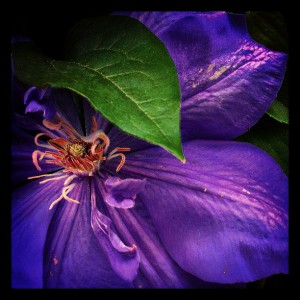
With my newly found mobile photography enthusiasm, I began writing about it in my Examiner.com column, which is the reason for the long gap between blog posts. Plus I entered a few images in the Mobile Photography Awards competition I saw on the Digital Photography Review website. Well last week I discovered in a Tweet from Jack Hollingsworth (@photojack) that the winners of the Mobile Photography Awards had been posted on their website. So I went right over to see if I placed. Well the images I thought were strong in their respective categories were not there. Bummer! When I got to Plants/Flowers category,and saw the stunning first prize wining entry  by Patrick Shourds, I thought, “Oh man, these look great, oh well”! But in the Honorable Mentions group was my entry, Purple Tears, and I was shocked and surprised. Plus I felt pretty damn good.

Here are the other images I entered into competition plus the link to the Mobile Photography Award winners page.

Slideshow:
Fullscreen:


Share

August 15, 2012

Mobile Photography: Confessions of a Camera Snob

Le Tombeau de Daguerre

Le Tombeau de Daguerre ©Jarvis Grant

Photographic technology has always spurred controversy in the art world. First here was photography itself. When photography first came on the scene in 1839, it was supposed to bring the death of painting, drawing, and art as we know it.  Now anybody could create an image. What was a true artist to do? Then film came along and replaced big cameras and glass plates. Now anybody could create an image! What was a real photographer to do? Then came portable 35mm roll film cameras you could fit in your pocket. They replaced large format 4×5 sheet film cameras. What was a real photographer to do? Next came color photography, how unnatural was that? Real photographs are made in black & white. Then came Polaroid’s instant photography. Instant photography no darkroom? Hell, now anybody can take a picture without even waiting a week to get their pictures back. Then came digital photography, replacing film. Hey, only real photos can be made with film cameras. Now anybody can take a good picture by “fixing” it in Photoshop. What’s a real photographer to do?

Well now it seems that photo tech has arrived at a new  paradigm, the mobile phone–camera.  With this new development in photo tech, you don’t even need a camera! What’s a real photographer to do?! For the past seven years, phone cameras have evolved from a dinky two megapixel joke to a decent eight megapixel creative tool.  Phone cameras have grown from novelty toys to the voice of people toppling dictatorial requiems around the world.  Now that almost everybody is carrying a video camera and a still camera in their pocket, web services like Faop for selling iPhone images as stock and ScoopShot as spot news cuts into the stock photography and photojournalism business model for many established photographers.

Now, I have been a long time camera snob when it comes to mobile photography and photography in general.  When all the hype about the iPhone came out I was a skeptic. Then when all of the accessory  and equipment hype came out, I thought there were a lot of folks drinking the Apple Kool-Aid! I mean why would any body want to put a $1000 plus Nikon or Canon DSLR lens on an iPhone? What’s the point. Get a camera! It’ll be easier to handle, give you more control, and will possible be smaller than having a five inch DSLR lens dangling from an iPhone. And don’t even mention an iPad tablet!

However, this past winter I went to a NAPP event at the Washington Convention Center and ran into my friend, classmate, and fellow creative pro Lorenzo Wilkins. He casually showed me some pictures from a recent trip he made on his iPhone. Man, I was blown away! Lorenzo’s images looked really good. At that moment I got the whole iPhone portfolio thing. I’ve seen lots of iPhone pics but was never really that impressed. I always felt people were showing off the phone not their images.

About a month ago I was forced to upgrade my old HTC Diamond Touch to a HTC EVO 4G LTE. The Touch Diamond finally died after 5 years of good service, but I never really used the Touch’s camera. It was okay, but not for taking real photos. I only used its 3 megapixel camera for visual note taking.  Then my daughter, Maya,  told me about Instagram and how she was using it to get her digital painting out into the world. So, I downloaded the app and started to play around with it. It was quite intriguing. Once I got used to it and my phone’s camera, I began to come up with a couple of good shots. Then I just naturally stated to see how to better manipulate the camera’s controls, along with finding photo apps that allowed more image processing contols beyond Instagram’s filter set.

So now I’m at the point were I believe that phone-cams can be creative professional tools. I still believe that a real camera will offer up better results faster that a phone-cam. I just don’t dismiss phone-cams as merely toys for people who are too cheap or lazy to use a traditional camera. I now stand on the opposite side of the mobile photography argument. Well, at least I’m beginning to see the other side’s perspective.

Slideshow:
Fullscreen:
Share

May 1, 2012

Composites: Selections, mask and more!

Filed under: Design,Education,Observations,Photoshop — Tags: , , , , — Jarvo @ 4:18 pm
Full Screen Shot

Selections are Alpha Channels that are used in creating Mask. Here is the main figure used in my composite, "Isis". ©Jarvis Grant 2012

Knowing how to make a selection in Photoshop is an artist’s secret weapon. It’s the most important tool/technique that one should master as early as possible. With that said, there is no single “best” ways to create a selection. Everyone has a couple of go to favorites. New students usually start with what Scott Kelby coins as the “Tragic Wand”. Once you understand that there’s more tragic than magic  in that wand, you start to look for options. For many it’s using the Path Tool, which I personally hate! For others it can be the Color Range command. The folks at Adobe know that power and the pain of creating selections and have been developing the Refine Edge command into its on Panel in Photoshop since version CS4. Back in the day, those “marching ants” were at the heart of composting images for designers and illustrators. Yet today there can be more to making a composite than selections.

I’m thinking and writing about this topic because last week I put together  an article on Examiner.com on Saving Selections in JPEG Files. When ever I do an article I first collect the images I’ll use for the article. Then I’ll go through what ever process I’ll be writing about to get the steps clear in my head. First, I wanted to choose an image that I could make a very simple selection with. I had a partial silhouette shot in the studio that would work fine. Went through th steps and made a few screen shots. I was done. The only thing needed now was a new background for the figure to illustrate the new image composite. No big deal, two layers and that will be that. I had a few NASA wallpapers from the Hubble Telescope web site I felt would make a quick and dirty yet fairly interesting image. In fact it turned out to be interesting enough that I seemed to be on a roll! So much so that I began to think about this blog post.

The Layer Panel for Isis

What started just to be two layers turned out to be a few more. ©Jarvis Grant 2012

What started as a simple story with two layers began to grow. Once the main story was invented, I needed to enhance the “mood” of the piece. To achieve this I began to use Blending Modes. The interesting thing was that I was still just using the the main images of the figure and her new background. Using Layer Masks, dupes of the background were now being place on top of the figure, with elements being hidden or accentuated. Portions of the figure were selected and moved to their own layer and painted with Layer Styles. I also had a little help from Flaming Pear and Dover Publications. Well my point here is to not really go into detail of how the new image was made, but to speak to the fact that when “building” a composite it takes more than just ‘marching ants”.

While the final image is a fantasy, as a photographer, I still need elements of reality to bring it altogether. What is the direct and ambient light doing? Along with a healthy dose of trial and error. For example the NASA image though stunning, had a few visual holes into once the two images were placed together. I didn’t want to select stars from the background, because it only had a few, and I waned a little more variety. I found a few “space and star” brushes on the Internet. Through some that “trial & error”, I placed my new “stars” on their on layers and used Gradient Overlay Layer Styles, set to radial mode to give my stars that refraction of color that telescope give to photographs.

This was a simple artistic exercise that also used another secret artistic ingredient, Fun! In having a little fun I learned a few tricks and techniques that will turn up later in future work. Or maybe not! What started out as one thing with one purpose grew into something else. It also shows that even through working with a computer can seem overly technical, in the end, Photoshop is just another tool for artist to use and flow with.

A Dream of Isis

The final composite (so far!), of "A Dream of Isis" ©Jarvis Grant 2012

Share

April 21, 2012

Photoshop World DC 2012: Cool & Fun

PSW 2012 Seal

Photoshop World DC Seal

Well Photoshop World DC has come and gone! It was great having Photoshop on the Green & Yellow Metro line. No airports hassles, no hotel hang ups, just a quick three block walk to the Metro and then a quick 15 minute ride. BAM, I’m there! Photoshop World, a three day Photoshop Lovefest!  Yet I must confess, it’s not the experience it used to be for me ten years ago. While I felt I knew my way around Adobe Photoshop back in 2000, I began my digital imaging experience with Aldus PhotoStyler 1.0 in 1993 and migrated to Photoshop 3.0 in 1995 (Adobe bought Aldus). Photoshop 5.0 was still quite the Magic Box. Scott Kelby and NAPP  (National Association of Photoshop Professionals) opened a brave new world of digital imaging and design to me. Back then Photoshop World was simply amazing! Back in the day, Photoshop was a design, illustration, and prepress tool. Despite its name, there was very little photography going on at Photoshop World. There was only John Paul Caponigro and Jim Divitale talking about Photoshop for photographers.

Joe McNally explains speedlite technique with yours truly as workshop model! ©Jarvis Grant

Well, now all of that has changed. Photoshop World is extremely photography centric.  There’s was very little talk of design issues, no prepress except for two sessions by Dan Margulison LAB color, some video and some web, and a little video. The rest was photography. I should be happy, right? Well, I was. But after 30 plus years as a photographer and arts educator, I know the relationship of exposure of/stop, shutter speed and ISO, marketing, an exhibiting fine art photographer, etc. Plus, I also know that gear has very little to do with great image making. I’m also a Photoshop ACE (Adobe Certified Expert). I say that not to imply I’m a giant Photoshop Intellect. Not by any means.  For the most part Photoshop World, this year, allowed me to see that I was on the right track in my continued career goals, and that I actually know a thing or two! But hey, I am always looking for a couple of jewels to add to my utility belt.

Those pearls of wisdom and magic did present themselves to me from Calvin Hollywood and Greg Hessler. I got my Photoshop fix from German photographer Calvin Hollywood and my photography inspiration from Greg Hessler. Plus the mad cap antics Russell Preston Brown can be a bit “over the top” they never, ever disappoint! Not to mention some old tile religion from from speedlite wizard  and photo journalist Joe McNally. Some really good stiff. Whoa, don’t let me forget the geeky-krazy Corey Barker. Corey is very old school Photoshop. His Photoshop For Designers session definitely got to the core of what being a Photoshop Maestro is all about! He is also the creator of Photoshop Planet.

So, the next stop for Photoshop World is at Las Vegas, officially known as Photoshop West. If you have never gone to a Photoshop World, check it out. Also, when you go, don’t walk around with your Big-Ass DSLR! What’s the point? There’s nothing to shoot with it, except for at a couple of booths that do have models and lights set up. I recommend taking a  point & shoot. You’ll be be more free, and you’ll get more photos, and besides you’ve got three days!

Slideshow:
Fullscreen:
Share

March 18, 2012

Photoshop World 2012 Comes to Washington, DC

Photoshop World DC 2012 Poster

Photoshop World 2012 East Comes to DC! ©NAPP

Well, NAPP’s (National Association of Photoshop Professionals) Photoshop World is finally coming to the nation’s capital! That’s great, cause that’s were I live! Ya know, I’ve been a member of NAPP since 2000, or is it 1998? At any rate it has been for quite some time. NAPP is, by far, the best professional organization for people who use Photoshop and want to learn more about the program. With that said, Photoshop World is the best way to immerse yourself in all things Photoshop. The worlds best trainers and authors of Photoshop are in one location, and attendee have the best opportunity for meeting and conversing with them one on one. Photoshop World also affords you the chance to connect with vendors who are on the cutting edge of digital imaging. Well, at least the cutting edge at that moment! Now, with that said, Photoshop World can be like a Miles Davis concert during the 1980’s. As strange and bizarre as it can be, you can’t get help get a Golden Nugget unavailable anywhere else.

Photoshop World 2008 "Star Trek" theme

I wasn't going to the 2008 Photoashop World until I found out it was going to have a Star Trek theme! ©NAPP

Each year the conference has a theme. It can be anything.  From Formula One racing to boxing.  Themes can be based on popular culture like like Motown (Photown!) to a KISS Concert and  Star Trek. Kinda wacky for sure. Yet the business of doing Photoshop is taken very seriously. When I first started going to Photoshop World is was graphic design and illustration. Then later, web graphics, and finally photography and  digital video. Whatever’s the trend Photoshop World tries to get its membership up to speed on it. Yet I have to say, when I first attended Photoshop there was very little about photography. John Paul Caponigro and Jim DiVitale were the only Dream Team members that talked about photography and then Kevin Ames.  That’s because they were photographers! Then Russell Brownbegan showing photographers some very cool Tips & Tricks.Now, it seems Photoshop World has turned into a photography conference, simply because that is the “trend”.

Okay, with all that said, if you are in the Washington DC metro area, you should definitely stop by Photoshop World, If you’re not interested in the full conference, or think it’s too expensive, then get the Free Photoshop World Expo Pass. This pass will allow you to visit the Photoshop  World Expo floor. At the Expo many of the Photoshop Dream Team Instructor will be giving 30 minute  presentations.

So be sure to stop by the Photoshop World. It’s a three day Photoshop Love Fest  well worth the visit! You can stay in touch via the Photoshop World Hashcaster Site  and The Official PSW iPhone App.

See ya there!

Share

March 2, 2012

Red Tail Commander: Gen. Benjamin O. Davis Jr.

Lucasfilm's Red Tail Movie Poster

Lucasfilm's Red Tail Movie Poster. ©2011 Lucasfilm

There has been quite a bit of hoopla about the George Lucas movie, Red Tails. Much of the “controversy” is the idea of a white guy telling a black man’s story. The odd thing is that it has taken sixty nine years for somebody to tell the story of the Tuskegee Airmen in a major way. There is so much to recount about these guys, that it will take more than one telling to get it all out in a meaningful way. Actually, there are so many untold stories and myths about World War II and the participation of African Americans that have yet to told. But ya know, there’s something about the heroic romanticism of fighter pilots that is just hard to beat!

When I was a kid in high school, I was really into WWII aviation. I knew all the planes of the major players and of both theaters. The idea of  “living in fame or going down in flame” was  still exciting to a young man who knew nothing about the meaning of Life. But, hey I loved it. I also didn’t realize that I “never” saw one black face  in all the pictures  in the books I read  nor the movies I saw. With movies in particular, I never saw a heroic black man portrayed. Well that’s not totally true. I did see one in the Humphrey Bogart movie Sahara, Sergeant Major Tambul  played by Rex Ingram. Check it out.

When I graduated from Howard University in 1974, and was set on the path of “On Going Life Learning”, I ran into my first instance of the Tuskegee Airmen. My first thoughts were, “Man, why didn’t I know about these guys?!” Then I remembered, , “Oh yeah, that’s right, they were Black!” Out of sight and out of mind. Well I won’t dwell on that aspect of Americana, but I did find out about Benjamin O. Davis, Jr and his dad, Benjamin O. Davis, Sr., the first African American general in the US Army. The junior General Davis was the commander of the first all-black air unit, the 99th Pursuit Squadron. His service was stellar as a military commander, civil right activist, and statesman. The latter two aspects more covertly. Check out the link to learn more.

Okay, now it’s 1992 and Howard University is honoring the Tuskegee Airman with a special art exhibit and reception, honoring General Benjamin O. Davis, Jr. So I’m thinking, one of my newly found heroes is coming to the building were I work! Really!? I got to get a real photograph. Not a snapshot, I mean a real portrait. Ya know, one of the things I learned as a Professor of Art at Howard University, is that if you want to really get something done, don’t ask permission to do it! Just do it. Okay, so on the day of the reception I setup an impromptu studio in the Art Gallery’s storage space, and waited for Gen. Davis. Man, I was really nervous. Now, I’ve photographed many famous people, but this was a personal hero, and an unauthorized event. I was pretty scared! The moment came when the General walk into the Gallery, low key and laid back. I approached him and asked for the opportunity of a quick shot and he agreed.  As I snapped away with my Hasselblad, I ran on hoping to impress with my knowledge of WWII aviation and the Airmen. He seemed to be amused by this “kid”. What a moment!

General Davis was a warm and  very charming guy. I can’t remember what I must have said when he fell into his warrior moment. I got it and present it now. Right after this exposure, he went back to his smiling charming self. Yet in that moment, I could hear the roar of those American North American P-51’s and  German Messerschmitt Bf 109’s and at the war’s end the Messerschmitt Me 262, the first combat jet aircraft.  Just think about it, those Black pilots flying and kicking ass in their prop (propeller) P-51’s against jets. Man oh man, those cats could really fly!

Well, here’s the shot of Gen. Benjamin Otis Davis Jr.. Thanks General for opening yet another door of opportunity, and being a hero on so many fronts. A real Ace!

Portrait of General Benjamin O. Davis retired

Portrait of the Commander of the "Red Tails", Benjamin O. Davis , Jr. ©Jarvis Grant

Share

February 12, 2012

A Visit to Creative Clay Studios

The Kiln Gods @ Creative Clay Studios

The Gas Kiln Gods @ Creative Clay Studios

This weekend I visited the Creative Clay Studios located in Alexandria, VA with my friend and colleague, Terry deBardelaben. Terry had finished sculpting and bisque firing a rather large vessel and was taking her work to be glazed and fired at Creative Clay Studios. As stated on their web site, “Creative Clay Studios is Northern Virginia’s home for clay artists”. The space allows artists to use the space as they would their own studio while maintaining a larger inventory of all things clay than the average professional artist would be able to keep. Much like an open studio darkroom used to function back in the day. Creative Clay also is a place for artists at all levels, to learn different ceramic techniques and provides  a place of community for the ceramic artist working in the Washington DC metro area.

While I was there I met Ed Bull the founder of Creative Clay Studios. Ed loves fire! He is a Ceramic Fireman. While Terry and I were there, Ed was conducting a Valentine’s Couples Workshop. Pretty cool stuff! Couples taking the workshop create separate personal “gifts” for each other or work on a project together.  Anyway, Ed took great joy and pride  explaining how the Studio’s variety of kilns operate. He reminded me of the fact that there’s quite a lot of alchemy involved in the creation of ceramic art. The earth, water, assorted chemistry of color glazes all brought together through the magic elements of fire and timing. I really hadn’t heard that stuff since my days at University as an art student. It was fun to hear again. It was also cool to see Ed interacting with the professional artists that were in the studio. Conferring and interacting with them as colleagues and as Master Craftsman.

While at Creative Clay with Terry, I used the time to do impromptu documentation of her as she worked on this piece of artwork. I’ve been photographing and videoing her as she’s been working on her many projects. In fact, I was with her earlier that afternoon at her school were she provides Open Studio for her students at the St. Steven and St. Agnes Upper School. I was editing video I shot  at a workshop  she conducted about sustainability and making art. The Creative Clay Studio is a visually engaging  space. When she was finished working I told her I wanted to make a portrait of her in the space. Then Ed came back into the kiln room, and I asked him if I could photograph him too. I belive a got a couple of good environmental portraits of these two artists and I share them now with you.

Terry deBardelaben, Artist/Scholar

Terry deBardelaben, Artist/Scholar @ The Creative Clay Studios. ©Jarvis Grant

Ed-Bull, Artist & Founder of The Creative Clay Studios

Ed Bull, Artist & Fireman, Founder at Creative Clay Studios. ©Jarvis Grant


Slideshow:
Fullscreen:

Share

February 5, 2012

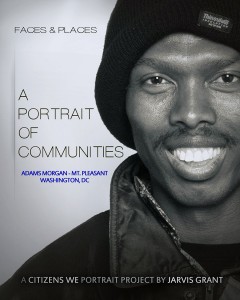
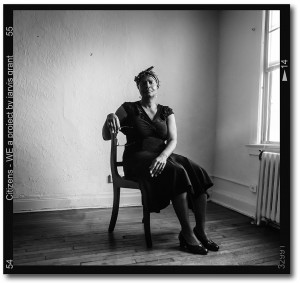
Citizens We Community Portrait Project, Continues…

Citizens We Logo

Nancy

Nancy, ©Jarvis Grant

A few month ago, I launch a proposal on USA Projects. I was seeking funding for, Citizens We. At that time I was looking to get $5000 for an upgrade to a new 24 inch Epson printer. Well, I didn’t make my goal and the USA Projects aspect of the project folded. With USA Projects it’s an All or Nothing deal. The odd thing is that while I got nothing from the USA Projects part of it, Citizens We actually began to pick up speed and developed a life of its own. People in the community bought into it, and it started to develop a life of its own.

The strange thing about the “Crowd Funding”  model was that many of the people I actually knew, friends and family,  didn’t support the project. They all wanted to write me a check! But, that’s not how this model works.  With Crowd Funding, you “pledge” an amount to a 3rd party organization. Three folks I knew, my daughter, Maya, and two Howard University classmates, Clarissa Sligh and Dan Wade, along with a former student, which I believe was Chris Belcher (or Chris Smith) bought into the process. The rest were strangers! Now, as disheartening as this was, I came out of the experience feeling pretty good. A colleague  of mine Debra Weiss gave me a call from LA to let me know she believed in the project and would add her support for it to continue. That call was HUGE to my ego and my sense that the Citizens We was an important project to keep pushing forward.

Back in December of 2011 another friend and colleague, Joanne Henson, offered me an opportunity to setup an impromptu studio at her Holiday Craft Bazaar. This afforded me the change to setup the studio, and solicited people to be a part of the project.  Along with making the photographs was doing the paperwork for Citizens We. This would not have been accomplished without the help and encouragement of my friend and now Project Director, Terry deBardelaben. Terry was the one who gave me the idea of a community portrait project, and her support has been my most valuable asset. Photographers like to believe they can do everything by themselves. At least that’s what their PR hype will push forward. But now I see that all artists need someone to manage the details. Or if are not managing those details, to point them out to the photographer/artist,  so their attention and action can be addressed.

Here are a few of the portraits I made at Joanne’s Holiday Craft Bazaar. There are some exciting things happening with the project that I’ll be sharing once we are underway. So for all of you that supported the project when it was on USA Projects thanks so very much! New aspects of the project are proceeding, and I’ll be informing you of the progress. Thanks a lot for your continuing and renewed support for Citizens We.

Slideshow:
Fullscreen:

Share

February 1, 2012

New Photography Magazine: The PHOTO Paper

Filed under: Folio,Media,Observations,Photography — Tags: , , , — Jarvo @ 4:54 pm
Cover The PHOTO PAPER

The PHOTO PAPER premire Issue cover

A couple of weeks ago I got an email notice from the Black & White Spider Awards. I was informed that my photographs were being included in the premier issue of a new photography magazine out of London, UK called The PHOTO Paper. This new magazine, “…spotlights the world’s finest photography and shares with its reader intelligent insights from the photographers of the published collections.”  For their premiere issue they’ve showcase a amazing international black & white collection featuring 522 photographers from 46 countries. Hey that’s nice. Glad to be a part of it! The PHOTO Paper comes in two flavors, print edition and digital edition.  The print edition of The PHOTO Paper includes editorial, stories and interviews. The digital issues have more pages and images than the print editions. The digital issues do not include editorial or interviews.

This approach is an interesting one, in that here in the US, there is a publication, Lenswork, that has been around for almost 20 years. With Lenswork, they have the opposite approach with their publication. The print edition is smaller and the digital edition is larger in both “pages” and scope. The digital editions takes advantage of being able to to show Black & White and Color photographs. It also has video and audio interviews. Plus it maintains a an archive of the podcast produced by the publisher Brooks Jensen. The digital edition also comes in a few flavors. There’s an iPad/Pod version, the DVD edition and a newly created online Lenswork digital hub, Daily Lenswork. Brooks Jensen has been able to keep his baby going fired by his passion for photography and the creative process. A few years ago, he made a very brave and bold decision. He took his print magazine off newsstand and offered it only through his Lenswork Virtual Newsstand web site. He was thinking green. Both for the environment and his bank account! In fact the whole Lenswork concept came about in part, to his reaction to the Fine Art Gallery System.  Jensen believed this “System” was not in the best interest of the artist. Lenswork offered an alternative platform of expression for the artist photographer. It also provided an alternative for artist on how to think about how to control their careers. I also feel that Lenswork provided Jensen with the opportunity to make a substantial contribution to the photographic community/industry. Check him and his publication out.

Ok back to me! Well, when I downloaded the PHOTO Paper digital edition pdf, I was very surprised to se that I had a page for one photograph and a double spread for the other. Thanks The PHOTO Paper. What sensitivity and taste you folks have! But seriously, I’m honored to be part of the Photo Paper’s premier issue. Plus a special shout out to the Black & White Spider Awards for making it possible. Thanks guys.


Slideshow:
Fullscreen:
 

Share

January 22, 2012

Technical Innovation and the Basics: Part 1

Filed under: Digital Tech,Innovation,Observations,Photography — Tags: , — Jarvo @ 2:43 pm

I was recently reading about the new Fujifilm X-Pro1 camera. This camera looks to be the “professional” version of Fujifilm X100.  I was very excited about the X100 even though I wasn’t in the market for a new camera. What excited  me about the X100 was the fact that this camera looked great! Any camera with a shutter speed dial and the f/stops on the lens barrel has got my vote. At least for now. When I saw the first X100 reviews, the camera seemed wanting. Then I thought about the criticism. Beyond the usual bugs found in first generation technology, the reviewer spoke about the “handling” of the camera. The photos were “blurry”. Not out of focus, but blurry. In the days of film cameras, blurry pictures were not the fault of the camera. It was then I realized, “This guy is new to photography, and has only handled digital cameras.

A few years ago I heard a very interesting comment from a pro shooter. He said that, “All digital cameras are point & shoot.” The comment was referencing a statement made by another photographer about difference in “quality”  (and probably more so, price) between pro cameras and amateur ones. The down play of cheaper/amateur cameras was that , “They to everything for you, not like a real (pricey/pro) camera. With the statement that “all” digital cameras are point and shoot cameras, this means that if a photographer actually understands the concepts of the photograph’s relationship to exposure and the situation, they can “program” the pricey camera to simply perform to the needs of any given situation. This allows the photographer to concentrate on getting the most compelling image, without concerning themselves with mundane technicalities of f/stops and shutter speeds.

The point of this little rant is that, when the reviewer said the camera produced blurry or soft photos, he blamed the camera, not his  technique. Film cameras had no “Image stabilization”. That was your job as photographer. You had to practice handling your camera. What’s the slowest speed I can get away with and have a sharp image? How fast can my thumb advance the film? How quickly can I load the camera (with film!)? These were basic issues and skills, back in the day. You were carful, not carefree. You looked hard, immersed yourself in the scene or situation, and you took your time without wasting any. The innovations in digital photography addresses these issues by allowing you to perform these skills with greater ease. Hey it’s great to be able to carry the equivalent of a brick of film (20 rolls) in your pocket! Yet, when photographers do not address the basic elements of photography, then the cameras and Fotoshop are taking and making the pictures.

Share
Older Posts »